

If you’re addicted to alcohol or drugs, sobriety is a relatively simple concept to define. Maintaining sobriety simply means abstinence from drugs or alcohol. Most substance addicts will tell you that total abstinence — forever — is the best way to maintain sobriety.
With some non-substance addictions, such as gambling or video gaming, the line is similarly clear. I’m sober if I don’t gamble or play video games.
However, for most of us who battle addictions to work, or food, or abusing technology such as mobile phones, total abstinence is impossible. We all have to work and to eat and (I would argue) to use smartphones in order to function in modern society.
So: how do I know if I’m really “sober,” or just fooling myself?
The answer is: emotional sobriety.
Problem One: Hijacked Emotions
Because it’s not an easy concept, it might be helpful to point out some obvious examples of the lack of emotional sobriety. In other words, while identifying an emotionally sober person might be very difficult, it’s extremely easy to see someone who is not maintaining emotional sobriety.
Think about it. We all see this type of behavior on a regular basis.
- The irate parent at the kids’ soccer game, who starts yelling curses at the ref when their child is on the wrong side of a bad call, then after a second “bad call,” runs onto the field and gets in the official’s face, threatening to have them fired by the league.
- The office worker who begins to cry during the team meeting, after receiving some mild correction from a boss or colleague. The boss apologizes and offers to take a short break, but the injured party refuses to calm down and instead storms out of the conference room.
- The friend who finds out they weren’t invited to the party, and proceeds to call everyone who was invited, screaming at them for their rudeness and insensitivity, and demanding that they not attend the party out of solidarity.
- The spouse who spirals out of control after reading a text message, and instead of coming home to talk, heads to the nearest bar with a sympathetic friend and stays out all night hoping their mate will worry about them and stay up all night feeling guilty.
Everyone has a bad day occasionally, and we are all entitled to our emotions, even negative ones.
Emotional sobriety doesn’t mean you never get emotional.
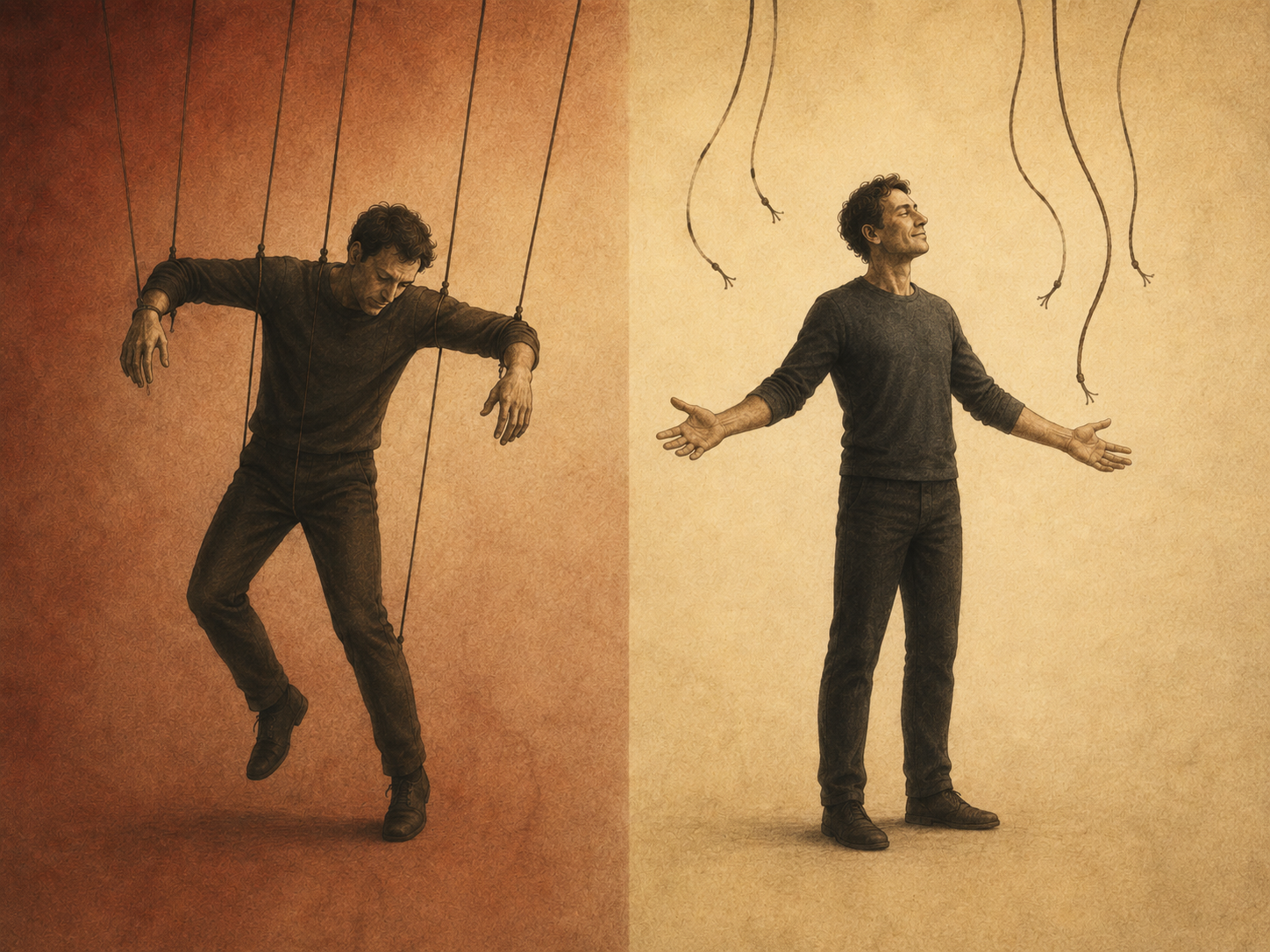
What it means is that your emotional response is proportionate to the situation, and your subsequent actions are drawn from a settled state of mind, rather than a hijacked one.
Over-reacting, hypersensitivity, histrionics and the like — especially if they are a pattern of behavior — are indicators of a lack of emotional sobriety.
Alcoholics Anonymous founder Bill W. introduced the term in his 1958 Grapevine letter “The Next Frontier: Emotional Sobriety.” His point was that being physically sober can still leave you emotionally dependent on people and circumstances. Bill wrote that he was victimized by these “frightful” dependencies, including an “absolute demand” for the possession and control of the people and the conditions surrounding him.
“Failing to get these things according to my perfectionist dreams and specifications, I had fought for them,” Bill wrote. “And when defeat came, so did my depression.”
In recovery, we have a name for people who are physically sober but emotionally drunk: “dry drunks.” They’re not drinking alcohol, but they’re still acting out in other ways. They have yet to achieve emotional sobriety. Alcohol was a numbing agent for their emotions. So, when they abstain from alcohol, they either find a non-alcoholic numbing agent, or they end up being controlled by their emotional state. Either way, they’re a dry drunk: and maybe no healthier than before they swore off alcohol.
Problem Two: Numbed Emotions
If the first problem is hijacked emotions, the second problem is the other side of that coin. There’s a difference between feeling your feelings, yet staying in control, and avoiding feelings altogether.
Going back to the non-substance addictions I mentioned above:
- If work is your numbing agent, your compulsive over-working, under-resting and “my brain won’t shut off” state of mind may be an attempt to escape feelings of fear or anxiety. Example: you check Slack at dinner because earlier that day, a vague email from your boss left you rattled.
- If food is your numbing agent, your craving for “comfort” or controlling your diet (or spiraling out of control by binge eating) may be your way to stuff feelings of anger or shame. Example: you hit the drive-thru on the way home after spending 45 minutes on hold with your insurance company, only to get disconnected.
- If your phone is your numbing agent, and you turn to an app the second you feel bored or uneasy, you may be seeking a “high,” temporary excitement or a dopamine hit to avoid sadness or loneliness. Example: you scroll for an hour before bed after a fight with your significant other.
When I was in my mid-30s, I was married and had two children. I also had a small business, employees, clients, deadlines, bills, debts and very little savings. You can imagine the pressure.
But if you’d asked me, I’d have said I wasn’t stressed. I didn’t feel fear. But neither was I happy. The fact is, I felt very little emotion at all. When my dad died, I didn’t cry, not once. When my kids were born, there were no tears of joy. The only emotion I allowed myself to feel was anger. Even that was bottled up most of the time. I’d let it out in the car, by myself when I could freely vent my rage on the person who cut me off on the freeway, or who didn’t step on the gas fast enough when the light turned green.
The rest of the time I lived in a state of constant irritation and mild frustration at everyone and everything. But you rarely saw me get angry. People would try to yell at me during an argument, and I’d just laugh. That just made them madder, but the more emotional someone got with me, the less emotional I’d be with them.
Let me state it plainly: lack of emotions is not emotional sobriety. It’s emotional immaturity. I was so emotionally immature, I often couldn’t recognize when I was having a feeling. This made it very hard to relate to my wife and children, who wanted and deserved an emotionally available husband and father.
The Middle Ground
Today, after a lot of recovery and a little therapy, I have learned to feel again, to cry tears of sadness and tears of joy, to be scared, to be happy, to be disappointed as well as excited.
For me, here’s what emotional sobriety looks like:
- I can check in with my nervous system.
- I can feel my emotions and not stuff them.
- I can just “be” … without needing activity.
- I can let others share their emotions with me.
- I can have peace without perfection.
Emotional sobriety means emotions are recognized and felt. Nurtured, not numbed. Can you feel anxious or sad or angry, and manage that in a healthy way? Can you explore why you’re feeling something, delve into the emotion, and not be overwhelmed by it? Emotionally sober people can enjoy the full spectrum of emotions and accept them without judgment, deal with them, and move through them with grace and maturity.
Emotional sobriety isn’t something I graduate from; it’s something I grow into.
Most of us have a default: we either get hijacked or we go numb. Which one is yours? Tell me in the comments.